

 Ghana
 Côte d'Ivoire
 Senegal
 Kenya
 Egypt
 South Africa
 United States
 United Kingdom
 China
 India
What this means
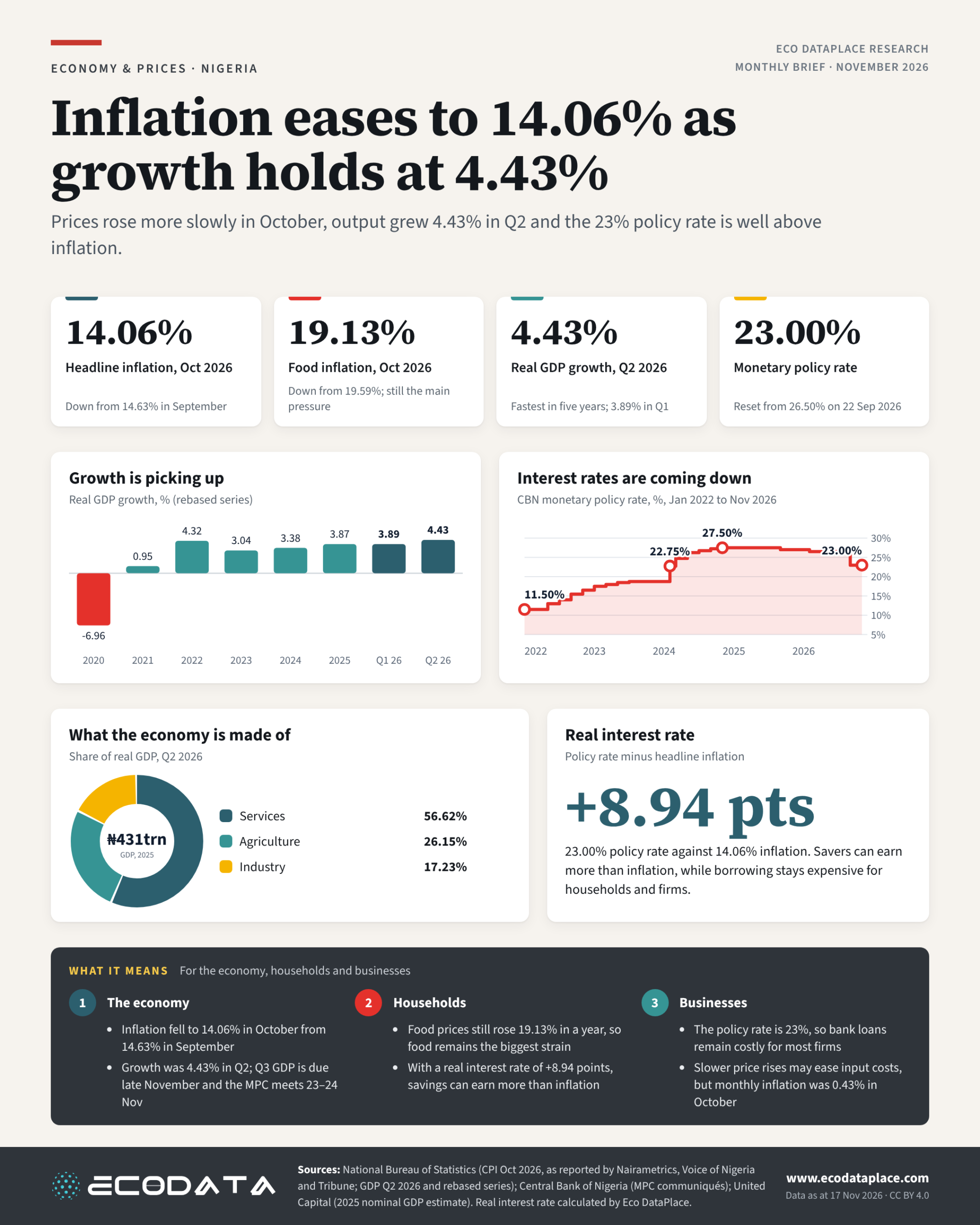
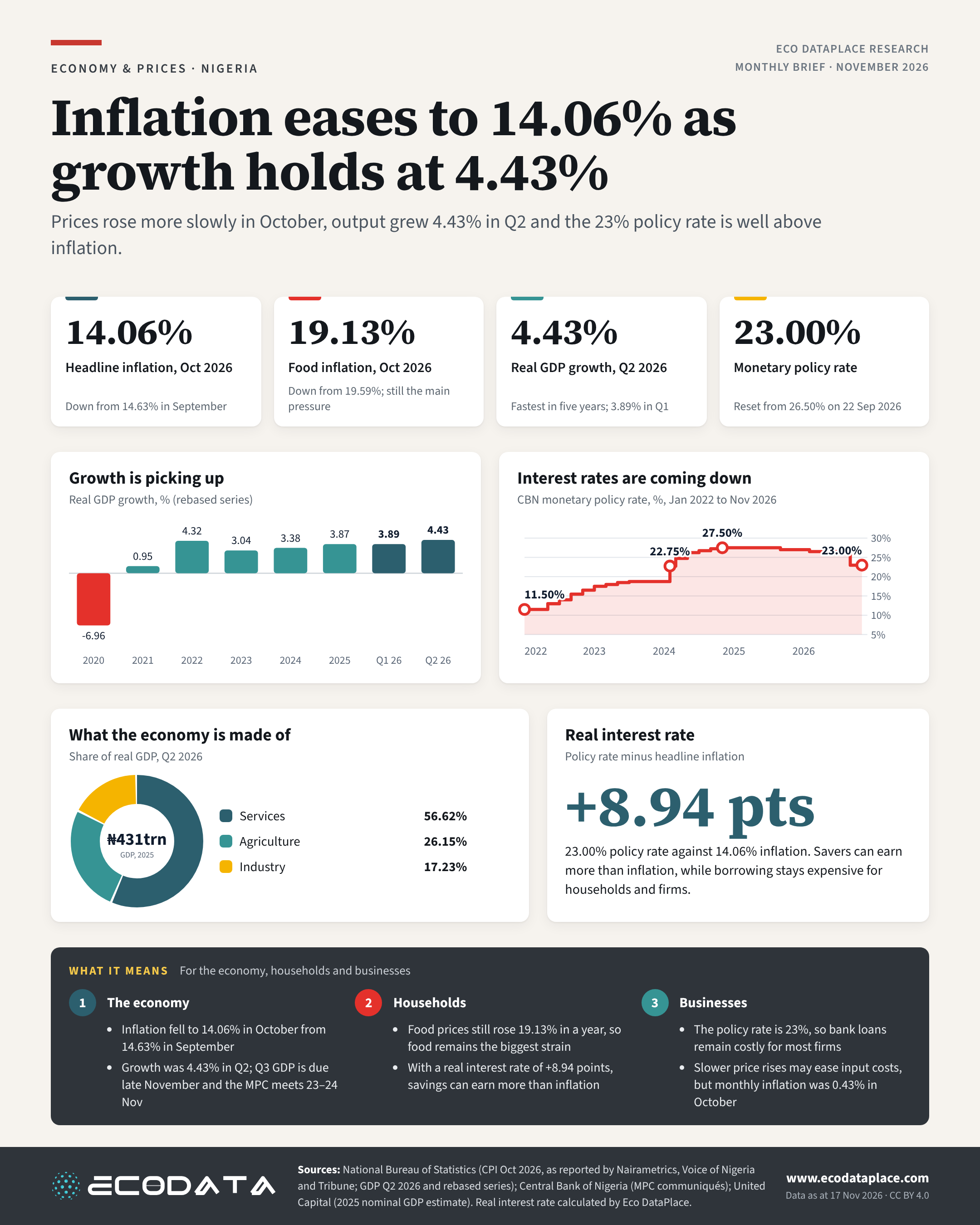
Headline inflation slowed to 14.06% in October 2026 from 14.63% in September, according to the National Bureau of Statistics. With the policy rate at 23%, the real interest rate has widened to +8.94 percentage points, while growth reached 4.43% in the second quarter.
For the economy
Slower price growth gives the Central Bank of Nigeria more room on rates; the Monetary Policy Committee meets on 23–24 November. Prices still rose 0.43% in October alone, up from 0.06% in September, so the monthly trend is worth watching. Third-quarter GDP is due in late November.
For households
Food prices rose 19.13% over the year to October, down from 19.59%, so food remains the largest strain on budgets. A wide gap between interest rates and inflation means some savings products can earn more than inflation.
For businesses
Borrowing remains costly with the policy rate at 23%. Easing inflation may relieve some input costs and support demand, but firms that rely on bank credit are unlikely to see quick relief in loan rates.
For information only; not investment or tax advice.