

 Ghana
 Côte d'Ivoire
 Senegal
 Kenya
 Egypt
 South Africa
 United States
 United Kingdom
 China
 India
What this means
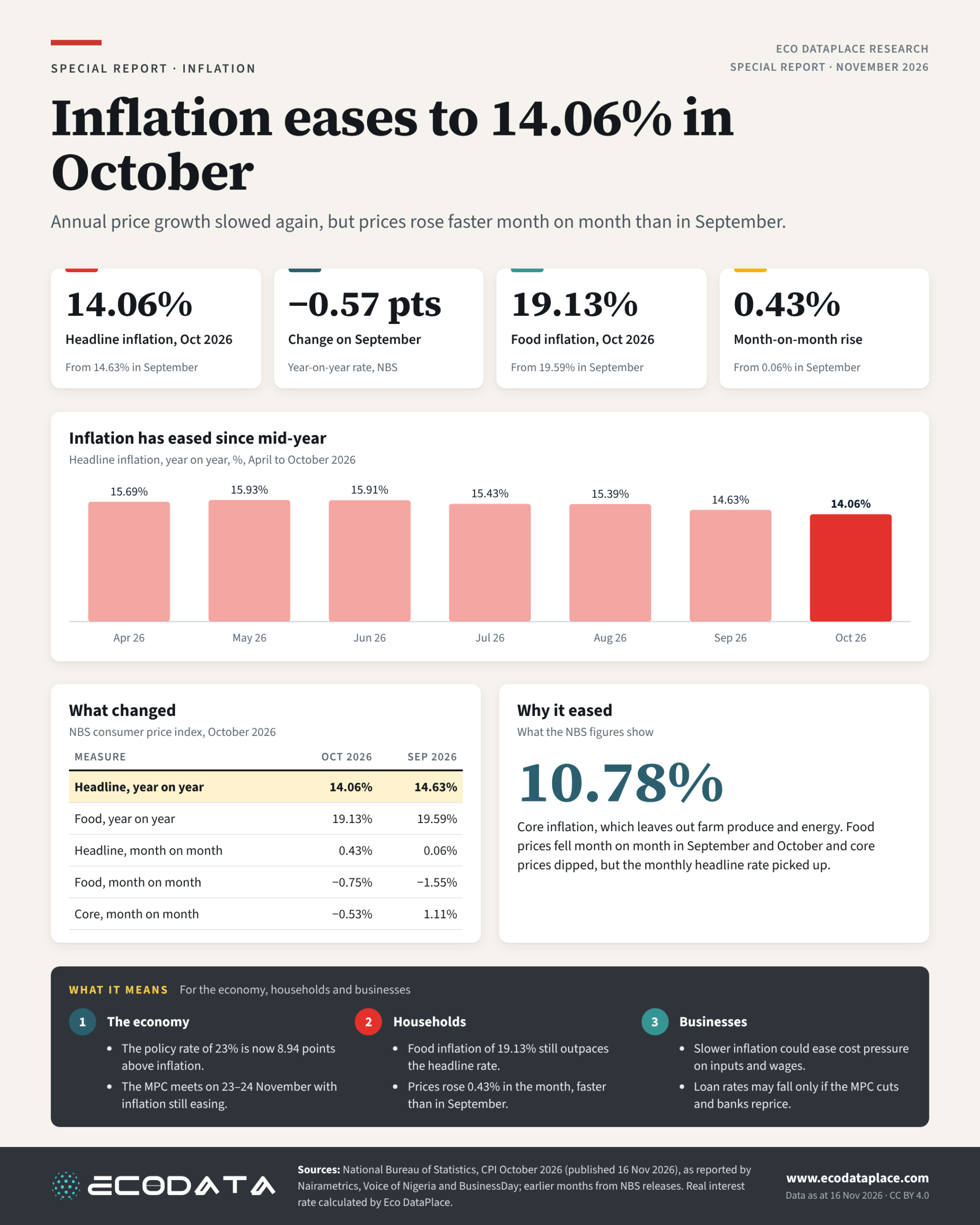
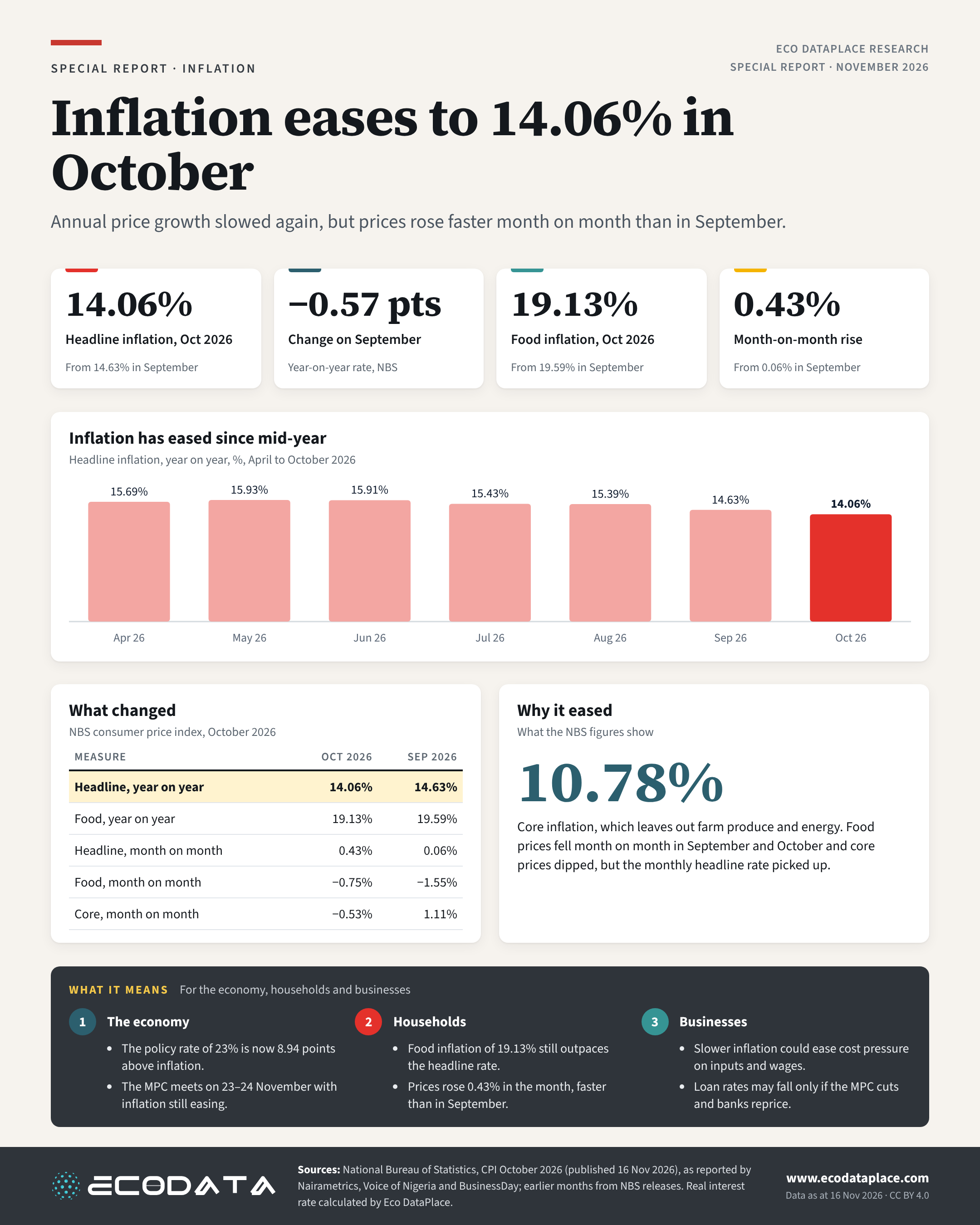
Nigeria’s headline inflation slowed to 14.06% in October 2026 from 14.63% in September, according to the National Bureau of Statistics. Food inflation eased to 19.13%. However, prices rose 0.43% in the month, faster than the 0.06% recorded in September.
For the economy
With the policy rate at 23.00%, the real interest rate has widened to 8.94 percentage points. The Monetary Policy Committee meets on 23–24 November, and slower inflation may give it room to consider its options, although the pick-up in the monthly rate could argue for caution.
For households
Prices are still rising, only more slowly. Food inflation of 19.13% remains well above the headline rate, so food continues to weigh most on family budgets. Savers in Treasury bills, at 15.89% for one year (11 Nov auction), are earning more than inflation.
For businesses
Slower inflation could ease pressure on input costs and wage demands. Borrowing costs are likely to fall only gradually, and only if lower policy rates are passed on by banks.
For information only; not investment or tax advice.